
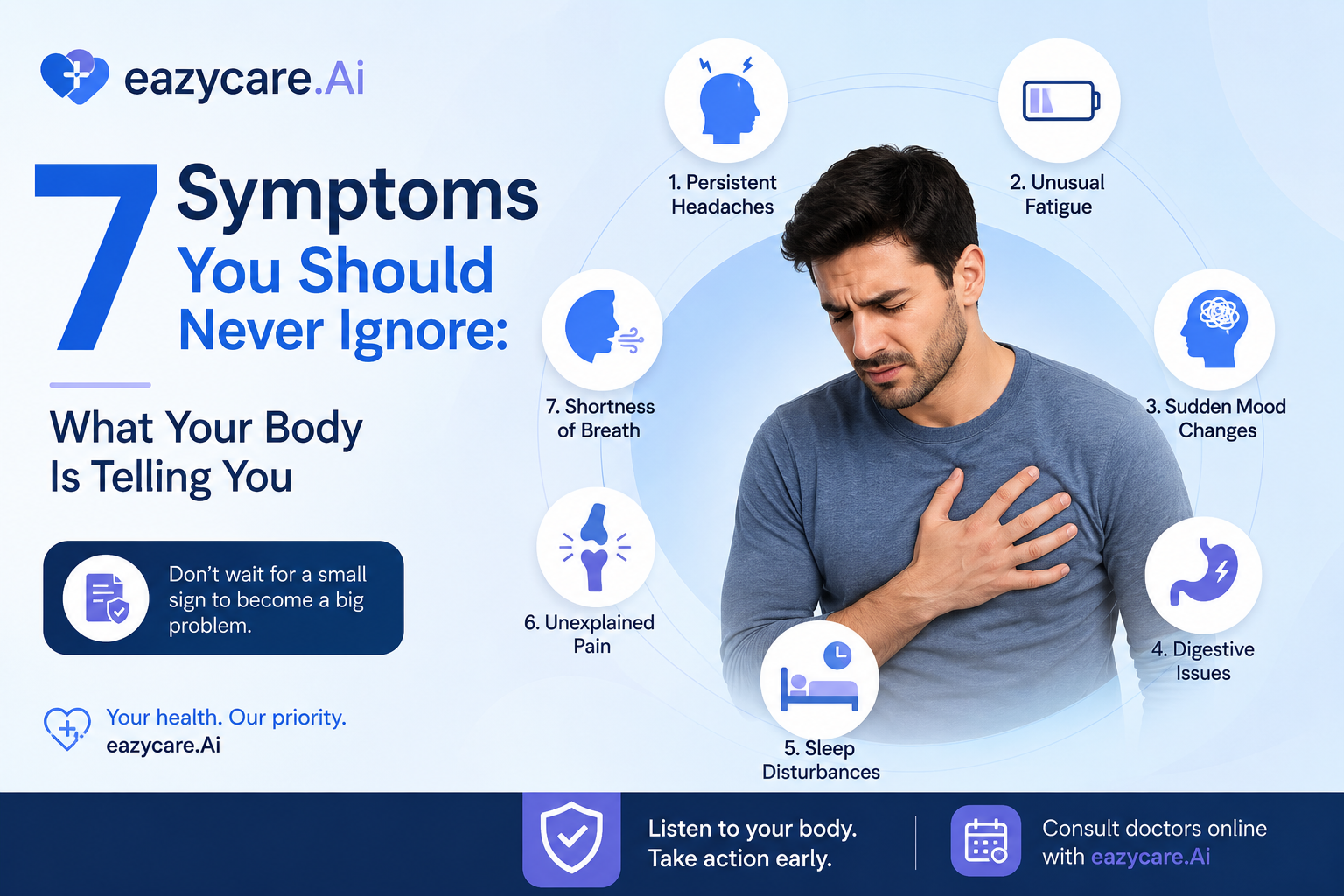
7 Symptoms You Should Never Ignore: What Your Body Is Telling You
Your body is telling you something critical when it produces symptoms that fall outside its normal baseline — and ignoring those signals is one of the most statistically dangerous decisions a person can make. Cardiovascular disease alone kills an estimated 17.9 million people annually worldwide, according to the World Health Organization, and a significant proportion of those deaths follow hours or days of dismissed warning signs. Recognising the seven symptoms described in this article could be the difference between early intervention and irreversible organ damage.
Key Takeaways
- Seven specific symptoms — including sudden severe headache, unexplained weight loss, and chest pain — carry disproportionate risk of serious underlying pathology and require prompt medical evaluation.
- In Southeast Asia, delayed help-seeking is a documented clinical problem: patients with acute coronary syndrome in the region wait an average of 3–6 hours before presenting to emergency departments, reducing survival odds significantly.
- Not every occurrence of these symptoms is an emergency, but none of them should be self-managed for more than 24–48 hours without professional assessment.
- The FAST acronym (Face drooping, Arm weakness, Speech difficulty, Time to call emergency services) remains the most validated rapid stroke screen for non-clinicians.
- EazyCare AI's symptom checker can help you triage urgency before deciding whether to visit a clinic or go directly to an emergency department.
- Early detection of cancer — one of the most common causes of unexplained weight loss — improves five-year survival rates by 30–50% depending on cancer type and stage at diagnosis.
Introduction: The Body's Warning System Is Not Subtle — We Are
Consider a 44-year-old logistics manager in Kuala Lumpur who notices his stools have turned dark and tarry for three consecutive days. He attributes it to the charcoal bread he ate at a trendy café. Two weeks later, he is admitted to hospital with a haemoglobin level of 6.2 g/dL — severely anaemic from a bleeding peptic ulcer that had been signalling its presence the entire time. This scenario is not unusual. It is, in fact, representative of a pattern that emergency physicians across Southeast Asia encounter weekly: patients who received a clear biological warning and rationalised it away.
The human body operates like a finely tuned feedback system. When a subsystem — cardiovascular, neurological, gastrointestinal, endocrine — begins to fail, it generates output signals long before catastrophic breakdown. These signals are symptoms. The problem is not that the signals are weak; it is that modern life provides abundant competing explanations. Fatigue becomes "work stress." Shortness of breath becomes "I need to exercise more." A lump becomes "probably a cyst." This cognitive reframing is understandable, but it is clinically dangerous.
Southeast Asia carries a particularly heavy burden in this context. The region accounts for approximately 38% of global cardiovascular disease deaths, according to WHO regional data, and cancer incidence is rising sharply across Malaysia, Indonesia, Thailand, and the Philippines as populations age and urbanise. At the same time, health literacy — the ability to interpret bodily signals accurately and act on them — remains inconsistent across income and education levels. Many patients present to tertiary hospitals only after symptoms have persisted for weeks or months.
This article identifies seven symptoms that clinicians consistently flag as high-priority warning signs. It explains the underlying biology of each, quantifies the associated risks where data exists, and provides clear guidance on when to seek care. For readers who are uncertain whether their symptoms warrant a clinic visit, EazyCare AI's symptom checker offers a structured, evidence-based triage tool available 24 hours a day.
Chest Pain or Pressure: The Symptom With the Highest Misattribution Rate
Chest pain is the symptom most frequently self-diagnosed as something benign — acid reflux, muscle strain, anxiety — and most frequently found, on investigation, to have a serious cardiac or pulmonary cause. According to a study published in JAMA Internal Medicine, approximately 2.1% of patients who present to emergency departments with chest pain and are discharged without a cardiac diagnosis experience a major adverse cardiac event within 30 days. That figure sounds small until it is applied to population scale: across Southeast Asia's combined population of 680 million, even a fraction of a percentage point represents tens of thousands of preventable deaths annually.
The clinical profile of cardiac chest pain — technically called angina or, in its acute form, acute coronary syndrome — is well characterised. It typically presents as a pressure, tightness, or squeezing sensation in the centre or left side of the chest, often radiating to the left arm, jaw, neck, or back. It may be accompanied by diaphoresis (cold sweating), nausea, or a sense of impending doom that patients frequently describe as unlike anything they have felt before. Critically, women, diabetic patients, and elderly individuals often present with atypical symptoms — fatigue, epigastric discomfort, or jaw pain — without classic chest pressure, which is why the "it doesn't feel like a heart attack" rationalisation is particularly dangerous in these groups.
Non-Cardiac Causes That Still Require Evaluation
Pulmonary embolism — a blood clot in the lung — presents with chest pain in approximately 40% of cases, according to the European Society of Cardiology guidelines. Aortic dissection, a tear in the wall of the body's largest artery, produces a sudden, tearing chest pain that radiates to the back and constitutes one of the most time-critical emergencies in medicine, with mortality increasing by approximately 1–2% per hour without surgical intervention. Spontaneous pneumothorax (collapsed lung) causes sharp, unilateral chest pain with sudden breathlessness and is more common in tall, thin young men — a demographic that often delays seeking care.
If you experience chest pain lasting more than 15 minutes, call emergency services (999 in Malaysia, 995 in Singapore) rather than driving yourself to hospital. Cardiac arrhythmias can cause sudden loss of consciousness, and emergency paramedics can begin treatment en route — reducing time to intervention by an average of 20–30 minutes compared to self-transport.
Practical takeaway: Any chest pain that is new, severe, lasts more than 15 minutes, or is accompanied by sweating, breathlessness, or radiation to the arm or jaw should be treated as a cardiac emergency until proven otherwise. Do not eat, drink, or wait to see if it resolves. Call emergency services immediately.
Sudden Severe Headache: When "The Worst Headache of Your Life" Is a Medical Emergency
Neurologists use a specific phrase to describe one category of headache: "thunderclap onset." This refers to a headache that reaches maximum intensity within 60 seconds of onset — as opposed to the gradual build of a tension headache or migraine. A thunderclap headache is a neurological emergency until proven otherwise, because its most dangerous cause is subarachnoid haemorrhage (SAH) — bleeding into the space surrounding the brain from a ruptured cerebral aneurysm. According to a systematic review published in JAMA, approximately 10–15% of patients who present with the worst headache of their life are subsequently diagnosed with SAH, and of those, 10–15% die before reaching hospital.
The challenge is that most severe headaches are not SAH — they are migraines, tension-type headaches, or cervicogenic headaches. But the clinical problem is that no patient can reliably distinguish between them without neuroimaging. A CT scan of the brain, performed within 6 hours of headache onset, detects SAH with approximately 98% sensitivity according to data published in The Lancet. After 6 hours, sensitivity drops, and a lumbar puncture may be required. The window for accurate, non-invasive diagnosis is narrow, which is why immediate presentation to an emergency department is the only appropriate response to a thunderclap headache.
Other Red-Flag Headache Features
Beyond thunderclap onset, clinicians are trained to look for a constellation of features that elevate a headache from routine to dangerous, according to a review in PubMed on headache red flags. These include: headache associated with fever and neck stiffness (suggesting meningitis), headache in a patient over 50 years old with no prior headache history (suggesting temporal arteritis or intracranial mass), headache that worsens with lying down or is present on waking (suggesting raised intracranial pressure), and headache following head trauma. Any of these features warrants same-day emergency evaluation, not a next-available GP appointment.
"A patient who describes the worst headache of their life deserves a CT scan, not reassurance. The cost of missing a subarachnoid haemorrhage is measured in lives."
— Clinical neurology teaching principle, widely cited in emergency medicine training
Unexplained Weight Loss: The Silent Alarm That Clinicians Take Seriously
Losing 5% or more of body weight over 6–12 months without intentional dietary change or increased physical activity is the clinical definition of significant unexplained weight loss. A 70 kg adult losing 3.5 kg or more without trying to do so crosses this threshold. According to a landmark study in the British Journal of General Practice, approximately 16–36% of patients presenting with unexplained weight loss are subsequently diagnosed with malignancy — making it one of the strongest non-specific cancer indicators available in primary care.
The mechanism is well understood. Many cancers — particularly gastrointestinal, lung, haematological, and pancreatic — produce cytokines (inflammatory signalling molecules) that suppress appetite and accelerate metabolic catabolism. The body begins consuming its own muscle and fat stores. This process, called cancer cachexia, is not simply a consequence of eating less; it is an active metabolic reprogramming driven by tumour biology. By the time cachexia is clinically apparent, the disease has often been present for months. Early detection of cancer — before cachexia develops — improves five-year survival rates by 30–50% depending on cancer type, according to WHO cancer data.
Non-Cancer Causes That Are Equally Important
Unexplained weight loss is not exclusively an oncological alarm. Undiagnosed type 1 or type 2 diabetes causes weight loss through glucosuria (glucose spilling into urine, carrying calories with it). Hyperthyroidism accelerates metabolism to a degree that outpaces caloric intake. Tuberculosis — still endemic across much of Southeast Asia, with the region accounting for approximately 44% of global TB incidence according to WHO 2022 data — causes weight loss, night sweats, and chronic cough. HIV, chronic liver disease, and inflammatory bowel disease are additional causes. The common thread is that all of these conditions are treatable, and all of them respond better to earlier intervention.
A loss of 5% of body weight over 6 months without intentional effort is the clinical threshold that triggers investigation. For a 60 kg person, that is 3 kg. For an 80 kg person, that is 4 kg. Track your weight monthly if you are over 40, have a family history of cancer, or smoke — these are the highest-risk groups for whom early detection has the greatest survival benefit.
Sudden Weakness, Numbness, or Confusion: Recognising Stroke in Real Time
Stroke is the second leading cause of death globally and the leading cause of adult disability, according to the Global Burden of Disease Study 2019 published in The Lancet. In Southeast Asia, stroke incidence is rising faster than the global average, driven by high rates of hypertension, diabetes, and smoking in the region. The defining clinical feature of stroke is its sudden onset: neurological deficits that appear abruptly, without warning, and typically in the context of a patient who was functioning normally minutes before.
The FAST acronym — Face drooping, Arm weakness, Speech difficulty, Time to call emergency services — was developed as a public health tool and has been validated in multiple studies as capturing approximately 88% of strokes when applied by non-clinicians. However, clinicians use the expanded BE-FAST acronym, which adds Balance disturbance and Eyes (sudden vision loss or double vision) to capture posterior circulation strokes that FAST alone misses. The critical time window for ischaemic stroke treatment with thrombolysis (clot-dissolving medication) is 4.5 hours from symptom onset — every 30-minute delay in treatment results in the loss of approximately 1.9 million neurons.
Transient Ischaemic Attack: The Warning Shot That Cannot Be Ignored
A transient ischaemic attack (TIA) — colloquially called a "mini-stroke" — produces identical symptoms to a full stroke but resolves within 24 hours, typically within minutes. The danger of a TIA is not the event itself but what it predicts: approximately 10–15% of TIA patients experience a full stroke within 90 days, with the highest risk in the first 48 hours. TIA patients who are assessed and treated urgently — with antiplatelet therapy, blood pressure control, and statin initiation — reduce their 90-day stroke risk by up to 80%, according to data from the EXPRESS study. A TIA that resolves completely is not a reason to avoid the emergency department; it is a reason to go immediately.
Blood in Stool or Urine: A Signal That Demands Investigation, Not Rationalisation
Visible blood in stool (haematochezia or melaena) or urine (haematuria) is among the most psychologically alarming symptoms a patient can experience — and yet it is also among the most frequently rationalised away. Bright red blood on toilet paper is attributed to haemorrhoids. Dark, tarry stools are attributed to iron supplements or food. Pink-tinged urine is attributed to beetroot consumption. In some cases, these attributions are correct. In a clinically significant proportion, they are not.
Colorectal cancer — the third most common cancer globally and rising rapidly in Southeast Asia among adults under 50 — frequently presents with rectal bleeding as its first symptom. According to the Ministry of Health Malaysia's clinical practice guidelines on colorectal cancer, patients who present with rectal bleeding and are found to have colorectal cancer at an early stage (Stage I or II) have a five-year survival rate exceeding 80%. Those who present at Stage IV — after months of dismissed bleeding — have a five-year survival rate below 15%. The difference between these outcomes is often a single colonoscopy performed at the time of first symptom.
Haematuria: Bladder and Kidney Cancer's Primary Signal
Painless haematuria — blood in the urine without associated pain — is the presenting symptom in approximately 80% of bladder cancer cases and a significant proportion of kidney cancer cases. The absence of pain is not reassuring; it is, paradoxically, a feature that makes the symptom more concerning rather than less. Urinary tract infections also cause haematuria but typically present with dysuria (painful urination), frequency, and urgency. Any episode of visible blood in the urine without an obvious infectious cause warrants urgent urological evaluation, including urine cytology and imaging.
Haemorrhoids are common — affecting approximately 75% of adults at some point in their lives — and they do cause rectal bleeding. However, colorectal cancer and haemorrhoids can coexist. A clinician cannot exclude colorectal cancer based on the presence of haemorrhoids alone. Any rectal bleeding in a patient over 40, or in a younger patient with a family history of colorectal cancer, requires endoscopic evaluation.
Persistent Shortness of Breath: When Breathlessness Signals More Than Deconditioning
Dyspnoea — the clinical term for breathlessness — exists on a spectrum. Breathlessness after sprinting up four flights of stairs is physiologically normal. Breathlessness while walking slowly on flat ground, or breathlessness that has progressively worsened over weeks to months, is not. The distinction matters because progressive exertional dyspnoea is one of the cardinal symptoms of heart failure, chronic obstructive pulmonary disease (COPD), pulmonary hypertension, and lung cancer — all conditions with significantly better outcomes when detected early.
Heart failure affects an estimated 26 million people globally, according to the European Society of Cardiology, and its prevalence is rising in Southeast Asia as the population ages and hypertension rates remain high. The hallmark of heart failure-related dyspnoea is its positional component: patients find it harder to breathe when lying flat (orthopnoea) and may wake from sleep gasping for air (paroxysmal nocturnal dyspnoea). These symptoms reflect fluid accumulating in the lungs when the body is horizontal — a direct consequence of the heart's failing pump function. Patients who present with heart failure at an early functional stage (NYHA Class I or II) have a substantially better prognosis than those who present in decompensated failure requiring hospitalisation.
Acute Onset Breathlessness: A Different Urgency Category
Breathlessness that develops suddenly — over minutes rather than weeks — carries a different differential diagnosis and a higher immediate urgency. Pulmonary embolism, acute asthma exacerbation, anaphylaxis, and tension pneumothorax all present with acute dyspnoea and all require emergency intervention. The clinical rule is straightforward: sudden breathlessness that is severe, associated with chest pain, or accompanied by haemoptysis (coughing blood) is an emergency. Gradual breathlessness that has worsened over weeks is urgent but not immediately life-threatening — it requires a same-week GP or specialist appointment, not a wait-and-see approach. For guidance on which category your symptoms fall into, EazyCare AI's symptom checker can help you triage appropriately.
Persistent Fever, Night Sweats, and Fatigue: The Triad That Points to Serious Systemic Disease
Fever lasting more than two to three weeks without an identified cause is classified as fever of unknown origin (FUO) — a clinical category that triggers a systematic diagnostic workup because its causes include conditions that are serious, treatable, and time-sensitive. The three major categories of FUO are infection (most commonly tuberculosis, infective endocarditis, or occult abscess), malignancy (most commonly lymphoma or leukaemia), and autoimmune or inflammatory disease (most commonly adult-onset Still's disease or systemic lupus erythematosus). Together, these three categories account for approximately 70–80% of FUO cases in which a diagnosis is eventually established.
Night sweats — drenching sweats that require changing clothing or bedding — are a particularly important symptom when they occur alongside fever and unexplained weight loss. This triad, known as "B symptoms" in haematological oncology, is a staging criterion for lymphoma and carries prognostic significance. Tuberculosis produces an almost identical symptom cluster and remains highly prevalent across Southeast Asia: the region accounts for 44% of global TB incidence, with Indonesia, the Philippines, and Myanmar among the highest-burden countries globally according to WHO 2022 TB data. A patient in Southeast Asia presenting with three months of night sweats, weight loss, and low-grade fever should be evaluated for TB as a primary diagnosis, not an afterthought.
Fatigue is the most non-specific symptom in medicine — virtually every systemic illness produces it. Its clinical significance increases when it is disproportionate to activity level, fails to improve with rest, and is accompanied by other systemic symptoms. Anaemia, hypothyroidism, diabetes, chronic kidney disease, and depression all cause fatigue and are all diagnosable with a basic blood panel. The appropriate response to fatigue that has persisted for more than four weeks and is affecting daily function is a GP visit and a full blood count — not another week of early nights. For patients unsure whether their fatigue warrants investigation, EazyCare AI's clinical tools can support structured symptom assessment.
Symptom Urgency Reference: When to Act and How Fast
| Symptom | Possible Serious Cause | Time to Seek Care | Action |
|---|---|---|---|
| Chest pain with sweating or arm radiation | Acute coronary syndrome, aortic dissection | Immediately | Call 999 / 995 |
| Thunderclap headache | Subarachnoid haemorrhage | Immediately | Call 999 / 995 |
| Sudden facial droop, arm weakness, speech difficulty | Stroke | Immediately | Call 999 / 995 |
| Sudden severe breathlessness | Pulmonary embolism, pneumothorax | Immediately | Call 999 / 995 |
| Visible blood in urine (painless) | Bladder or kidney cancer | Within 48–72 hours | GP or urgent care visit |
| Rectal bleeding (over 40 or family history) | Colorectal cancer | Within 1 week | GP referral for colonoscopy |
| Unexplained weight loss ≥5% over 6 months | Malignancy, TB, diabetes | Within 1–2 weeks | GP visit with blood panel |
| Fever >3 weeks with night sweats | TB, lymphoma, endocarditis | Within 1 week | GP visit with investigations |
| Progressive breathlessness over weeks | Heart failure, COPD, lung cancer | Within 1 week | GP visit with ECG and chest X-ray |
Frequently Asked Questions
What exactly does "what your body is telling you: 7 symptoms you should never ignore" mean?
It refers to seven specific physical warning signals — chest pain, thunderclap headache, unexplained weight loss, sudden neurological deficits, blood in stool or urine, progressive breathlessness, and persistent fever with night sweats — that clinical evidence consistently associates with serious underlying disease. These are not symptoms that should be managed with rest and over-the-counter medication for weeks. They are signals that the body's feedback system is detecting a significant problem — one that requires professional investigation to identify and treat. The phrase "what your body is telling you" reflects the biological reality that symptoms are not random; they are the output of a system under stress, and interpreting them accurately can be life-saving. EazyCare AI's symptom checker can help you assess which category your symptoms fall into.
When should I see a doctor for these symptoms?
The urgency depends on the specific symptom and its characteristics. Chest pain with radiation or sweating, thunderclap headache, sudden neurological deficits, and acute severe breathlessness require immediate emergency services — call 999 in Malaysia or 995 in Singapore without delay. Visible blood in urine, rectal bleeding in a patient over 40, and unexplained weight loss require a GP visit within 48–72 hours to one week. Persistent fever with night sweats lasting more than two weeks and progressive breathlessness over weeks require a GP visit within one week. The general clinical rule is: if a symptom is new, severe, or worsening, it warrants earlier evaluation than if it is mild and stable. When in doubt, EazyCare AI's symptom checker can help you decide whether you need urgent care.
Can I manage any of these 7 symptoms at home?
For the emergency-tier symptoms — chest pain, thunderclap headache, stroke symptoms, and acute breathlessness — home management is not appropriate and attempting it costs critical treatment time. For the non-emergency symptoms, limited supportive measures are reasonable while awaiting a medical appointment: staying hydrated during fever, avoiding NSAIDs if there is blood in the stool (as they can worsen gastrointestinal bleeding), and monitoring weight weekly to track the trajectory of unexplained weight loss. However, home management should never replace professional evaluation for any of these seven symptoms. The appropriate framing is: manage comfort at home while actively pursuing a medical appointment, not instead of one. EazyCare AI's symptom checker can help you assess whether your symptoms require urgent care.
Are these symptoms different in women compared to men?
Yes, and this distinction is clinically important. Women experiencing acute coronary syndrome are significantly more likely to present with atypical symptoms — fatigue, nausea, jaw pain, or upper back pain — rather than classic chest pressure. This contributes to documented delays in diagnosis and treatment for women with heart attacks. Similarly, women are more likely to experience TIA symptoms that are non-focal (confusion, altered consciousness) rather than the classic unilateral weakness or speech difficulty. Diabetic patients of any gender are also more likely to have atypical presentations due to autonomic neuropathy blunting pain signals. The practical implication is that the absence of "classic" symptoms does not exclude serious pathology, particularly in women and diabetic individuals.
How common is it for these symptoms to turn out to be something serious?
The base rates vary significantly by symptom. Thunderclap headache has approximately a 10–15% probability of representing subarachnoid haemorrhage. Unexplained weight loss carries a 16–36% probability of underlying malignancy in primary care populations. Painless haematuria has an approximately 20% probability of bladder or upper urinary tract cancer in adults over 50. Rectal bleeding in patients over 50 has a 2–10% probability of colorectal cancer depending on associated features. These probabilities mean that the majority of patients with these symptoms will not have the most serious diagnosis — but the minority who do have it will benefit enormously from early detection. The asymmetry of outcomes justifies investigation in all cases.
What blood tests should I ask for if I have unexplained fatigue and weight loss?
A clinician evaluating unexplained fatigue and weight loss will typically order a full blood count (to detect anaemia, leukaemia, or infection), erythrocyte sedimentation rate and C-reactive protein (inflammatory markers), thyroid function tests, fasting glucose and HbA1c (to exclude diabetes), liver and kidney function panels, and in appropriate populations, a TB screening test (Mantoux or IGRA). Tumour markers such as CEA, CA-125, or PSA may be ordered based on clinical suspicion and patient demographics. This panel covers the most common treatable causes and provides a foundation for further investigation if initial results are abnormal. Do not self-order these tests without clinical context — interpretation requires professional assessment of the full clinical picture.
Is it possible to have a heart attack without chest pain?
Yes — this is called a "silent myocardial infarction" and it accounts for approximately 22–45% of all heart attacks detected on electrocardiogram, according to data from the Framingham Heart Study. Silent heart attacks are more common in women, elderly patients, and individuals with diabetes, whose autonomic neuropathy reduces pain perception. They may present as unexplained fatigue, mild breathlessness, or simply as an incidental finding
